
OUR RESOURCES
Case Studies
North Carolina Homes Case Study
12 kW Solara Power: Backup Battery + Solar for North Carolina Homes
System Overview
Solar Panels: 12 kW PV array (~30 high-efficiency panels)
Inverter: 12 kW Solara Hybrid Inverter
Battery Storage: Two Solara Power Batteries, 14.3 kWh each (28.6 kWh total, ~25.7 kWh usable)
Average Home Size: 3,000 sq ft, all-electric or hybrid
Backup Coverage: Refrigerator, Wi-Fi, lighting, HVAC fan, washer/dryer, kitchen outlets
Power Flow: Solar → Inverter → Home Loads + Battery → Grid Export
How the System Supports the Day
AM: Solar panels power home and charge both Solara batteries.
PM: Solar runs home, fills batteries, and sends extra power to the grid.
Evening: Battery energy powers essentials like lights, fridge, HVAC, and outlets.
Night: Reserve energy lasts ~23–32 hours depending on usage.
Next Morning: Solar recharges batteries automatically.
System Math and Runtime
PV Production: 12 kW array ≈ 36–54 kWh/day (depending on season and shading).
Battery Runtime: 25.7 kWh ÷ 1.1 kW load ≈ 23 hours.
Light Use Mode: ~0.8 kW load ≈ 32 hours of autonomy.
Inverter Power: 12 kW continuous, supports most home loads simultaneously.
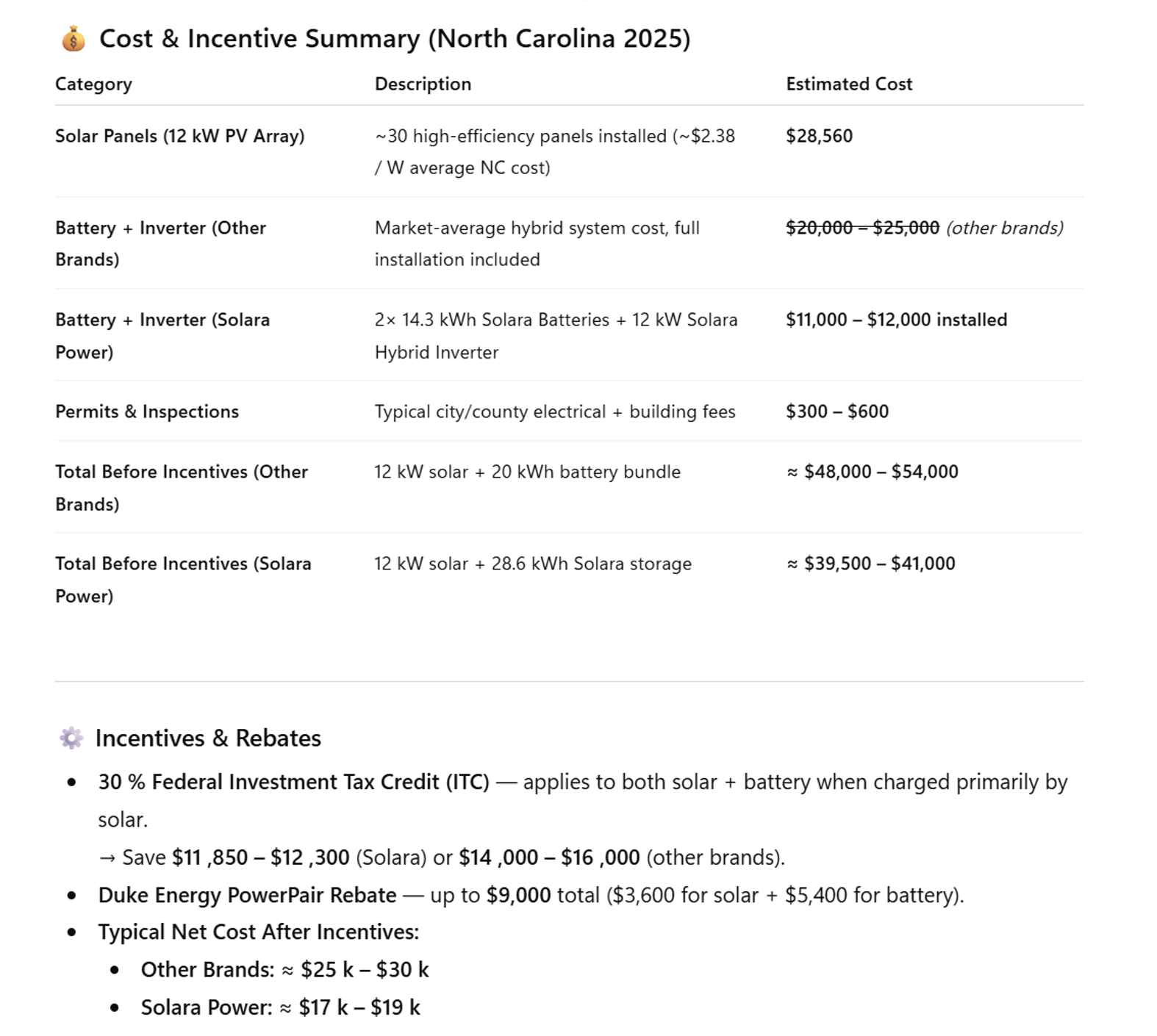
Cost & Incentive Summary (North Carolina 2025)
By integrating the Solara Power hybrid inverter and battery system, homeowners in North Carolina can expect:
- Up to 35 % lower upfront cost compared with other major brands.
- Faster ROI (approx. 6–8 years typical).
- Longer runtime (28.6 kWh total storage ≈ 25.7 kWh usable).
- Full eligibility for Duke Energy PowerPair and the 30 % Federal ITC

Florida Homes Case Study
Balancing Generator and Solar: A Florida Home Backup Power Consultation

Overview
In this case study, we showcase how Solara Power provided a customized backup power solution for a 2,500 square foot Florida home with a swimming pool, averaging about 38 kWh per day. The client initially wanted a generator-only solution to avoid the cost of solar panels.
Our Process
- Needs Assessment:
We assessed the client’s energy usage and explained that while a generator could provide backup power, it might not be the most cost-effective or sustainable long-term solution. Generators rely on fuel and have ongoing maintenance costs. In contrast, integrating solar panels could reduce operational costs over time. - Proposal Development:
We provided a detailed cost breakdown. The generator and battery system met the client’s initial budget, but adding solar panels increased the overall investment. We emphasized that a solar-plus-generator solution would provide more reliable and cost-efficient backup power over time. - Client Education:
We explained why a generator alone might not be ideal. Relying solely on a generator means dealing with fuel costs and potential supply issues during extended outages. By contrast, solar panels could lower those costs and provide a greener, more sustainable option.
Outcome
The client decided to wait until they could budget for the combined solution. They appreciated our transparency and the insight into why a generator alone might not fully meet their long-term goals. This case study shows how Solara Power tailors Florida home backup power solutions to ensure clients understand all their options.
Contact information
Our Address
171 Tradition Trail, Ste102, Holly Springs NC 27540